Remote Work Skills: What Employers Actually Look For
A hiring manager once described a candidate she almost passed on, since his technical marketing skills were only average compared to others. What ultimately won her over was a single detail buried in his interview: he described exactly how he organized his workday, communicated proactively with a previous remote team, and handled a specific miscommunication without waiting for someone else to notice it first. Technical skill got him considered. Remote work maturity got him hired. This final post of our series shifts focus slightly from marketing-specific knowledge to something increasingly just as important in today’s job market — the practical skills that make someone genuinely effective working remotely.
Why Remote Work Skills Matter So Much Today a lot of jobs in digital marketing, whether they are full-time or freelance, take place at least largely, if not completely, outside of a typical office setting.. This shift means employers aren’t just evaluating whether you understand marketing concepts — they’re also quietly assessing whether you can genuinely function well without the built-in structure, oversight, and casual accountability an office environment naturally provides. Someone might be technically skilled but genuinely struggle without regular in-person check-ins, while someone with slightly less polished technical skill but strong remote work habits often ends up being the more reliable, trusted long-term hire. Core Remote Work Skills Worth Genuinely Developing Clear, Proactive Communication In an office, quick clarifying questions happen naturally through casual conversation. Remote work removes that built-in safety net, meaning miscommunication can quietly snowball if left unaddressed. Employers consistently value people who communicate clearly, ask clarifying questions early, and proactively update others, rather than waiting silently and hoping things work out. Genuine Self-Management Without someone physically present to check progress throughout the day, remote work requires genuine internal discipline — managing your own time, prioritizing tasks sensibly, and following through on commitments without needing constant external reminders. Comfort With Asynchronous Work Remote teams, especially across different time zones, often can’t rely on immediate back-and-forth conversation the way an office naturally allows. Being comfortable working independently, making reasonable decisions without instant confirmation, and clearly documenting your thinking for others to review later is a genuinely valuable, often underrated skill. Written Communication Clarity Since much of remote work happens through written messages rather than spoken conversation, being able to clearly explain your thinking, ask precise questions, and avoid unnecessary back-and-forth confusion through text alone becomes a surprisingly significant skill. Comfort With Digital Collaboration Tools Familiarity with commonly used project management, communication, and file-sharing platforms helps remote teams function smoothly. While specific tools vary between companies, general comfort adapting quickly to new digital systems matters more than expertise in any single specific platform. Emotional Resilience and Independence Remote work can occasionally feel isolating, without the natural social energy of an office environment. Employers often value candidates who demonstrate genuine self-motivation and emotional steadiness, rather than relying heavily on external encouragement to stay engaged and productive. A Simple Way to Picture the Difference Imagine two employees receiving the exact same ambiguous instruction from a manager: “Let’s improve our email open rates this month.” One waits silently, assuming clarification will eventually arrive, and produces little progress by the time a follow-up meeting happens. The other proactively messages a few clarifying questions, makes a reasonable initial plan based on available information, documents their thinking clearly, and shares early progress without needing to be asked. Both might have similar technical marketing skill, but the second person demonstrates exactly the kind of remote work maturity employers increasingly prioritize, regardless of specific marketing expertise. How to Demonstrate These Skills During a Job Search Share specific examples during interviews. Rather than simply claiming to be “self-motivated” or a “good communicator,” describe an actual situation where you handled ambiguity, resolved a miscommunication, or managed your own schedule independently. Communicate professionally throughout the hiring process itself. How you respond to emails, meet deadlines during interview stages, and communicate scheduling changes often serves as a small, real preview of your remote work habits. Highlight any existing remote or freelance experience, even informal or unpaid projects, since these often naturally demonstrate genuine self-management and communication skills already in action.
Common Mistakes Beginners Make Assuming remote work simply means fewer distractions and more freedom. Without genuine self-discipline, remote work can just as easily lead to inconsistency and missed deadlines. Underestimating the importance of written communication. Vague, unclear messages often create more confusion and delay in remote settings than they would in a quick in-person conversation. Waiting for instructions rather than proactively communicating. Remote employers particularly value people who take initiative, rather than needing constant, direct oversight to stay productive. Neglecting to build routines and structure independently. Without a physical office signaling the start and end of a workday, some beginners struggle with consistency until they intentionally build their own reliable routine. Why These Skills Compound Alongside Marketing Knowledge Marketing skill alone rarely guarantees success in a remote-first environment. Employers increasingly look for a combination: genuine marketing capability, paired with the self-management, communication, and independence needed to execute that capability effectively without constant supervision. Beginners who intentionally develop both sets of skills Because the brain is simultaneously adjusting to two different neural pathways, beginners typically experience slower early gains and higher context-switching costs. When two seemingly unrelated abilities (such writing and marketing or coding and design) intersect, the learner can eventually develop a highly specialised, distinct niche. If people focus correctly, they can achieve a functional, basic level of competency in both areas thanks to concepts like purposeful practice and the 20-hour learning rule. together tend to stand out significantly more than those focused purely on marketing knowledge alone. Wrapping Up This Series Across this final section, we’ve walked through how to start a marketing career with zero experience, how freelancing can serve as a practical bridge into real paid work, which tools genuinely matter for beginners, what certifications are honestly worth, and finally, the remote work habits that quietly influence hiring decisions just asmuch as technical skill itself. Together ,this series has covered the full picture — from foundational marketing concepts, through AI, social media, analytics, and finally, the practical career skills needed to actually turn this knowledge into real, sustainable opportunity.
What Is a Digital Marketing Certification Worth in 2026?
A hiring manager once reviewed two nearly identical resumes for a marketing role. One candidate listed eight different certifications and no real project examples. The other listed just two certifications, alongside three genuine case studies showing actual campaigns they’d worked on, even as unpaid practice projects. The second candidate got the interview. Certifications mattered, but only as one part of a much bigger picture. We just explored the essential tools worth learning early in your marketing journey. Now let’s tackle a genuinely common question among beginners: are certifications actually worth the time and, in some cases, the money? What a Digital Marketing Certification Actually Is A certification is a credential earned by completing a specific course or exam, typically demonstrating a foundational understanding of a particular tool, platform, or marketing discipline. These range from free, self-paced courses covering broad marketing fundamentals, to more specialized, sometimes paid certifications focused on a specific platform or skill, like analytics or advertising systems. The Honest Truth About What Certifications Do and Don’t Prove A certification generally proves you’ve learned the concepts behind a topic. It rarely proves you can genuinely apply those concepts in a real, messy, unpredictable situation involving actual clients, actual data, and actual constraints. This distinction matters enormously. Employers and clients are ultimately hiring someone to solve real problems, not simply recite theory. A certification alone, without any demonstrated practical application, often carries far less weight than beginners initially assume. When Certifications Genuinely Add Value
When paired with real, applied experience. A certification becomes far more meaningful when you can point to an actual project where you applied that specific knowledge, rather than presenting it as a standalone credential. When entering a highly specific technical niche. Certain specialized areas, like specific advertising platforms or advanced analytics tools, sometimes value formal certification more heavily, since it demonstrates familiarity with tools that have a genuine learning curve. When you’re just starting out with zero other proof of ability. For complete beginners without any other portfolio or experience yet, a certification can serve as an early, tangible starting point, even if its weight decreases once real project experience begins accumulating. When applying to more traditional, larger organizations. Some larger, more process-driven companies place slightly more formal weight on recognized certifications during initial resume screening, compared to smaller businesses or agencies that often prioritize visible portfolio work instead. When Certifications Matter Less Than Beginners Assume When collected purely for the sake of collecting them. A long list of certifications without any real application behind them often reads as theoretical knowledge rather than genuine capability. When used as a substitute for actual project experience. Employers and clients generally care far more about demonstrated results than the number of completed courses listed on a resume. When the specific certification is outdated or narrowly focused on an already-declining tool or platform. The marketing landscape shifts quickly, and certifications tied to outdated platforms lose relevance faster than foundational, transferable skills.
A More Useful Way to Think About This It can be more beneficial to consider “what specific knowledge or credibility gap am I seeking to fill, and is a certification actually the best way to fill it?” rather than “should I get certified?” Sometimes the honest answer is yes — particularly for complete beginners needing an accessible, structured starting point. Other times, the better use of that same time might be building an actual portfolio project instead, which often demonstrates far more convincing, tangible proof of skill. A Simple Example Imagine two beginners both interested in paid advertising. One spends a month completing several advertising certifications, finishing with a stack of completion certificates but no actual campaign experience. The other spends that same month completing a single relevant certification, then immediately applies that knowledge by running a small, real advertising campaign for a friend’s business with a modest budget, carefully documenting the results afterward. When both apply for the same entry-level role, the second candidate has something significantly more persuasive to discuss in an interview — a real campaign, real numbers, and genuine lessons learned, rather than theoretical knowledge alone. How to Approach Certifications Strategically Step 1: Identify a genuine skill gap, rather than pursuing certifications randomly based on what seems popular or impressive-sounding. Step 2: Choose free or low-cost options first, especially early on, reserving paid, more advanced certifications for skills you’re confident you’ll genuinely use. Step 3: Immediately apply what you learn to a real or practice project, rather than letting the knowledge remain purely theoretical. Step 4: Present certifications alongside real examples, rather than as standalone credentials, whenever discussing your background with potential employers or clients.
Common Mistakes Beginners Make Considering credentials as a substitute for real, practical experience. Theoretical knowledge without application rarely convinces employers or clients of real capability. Collecting certifications without a clear strategic reason. A scattered mix of unrelated certifications often signals uncertainty rather than genuine focused expertise. Assuming certifications alone guarantee job offers. Certifications may make a door a little wider, but real results and proven ability are typically what get you through. The Honest Bottom Line Exam preparation provides a clear road map of what must be learnt, so certifications are not meaningless.. Instead of blindly looking for topics, you acquire the thorough, standardised knowledge that the market demands. Getting a certificate in your free time demonstrates your self-control, curiosity, and dedication to lifelong learning—qualities that top employers greatly respect. In order to bring your resume in front of a hiring manager, certifications such as the PMP for project management or AWS/Google credentials serve as a dependable green light. Their real value comes from serving as a structured starting point for genuine learning, ideally paired quickly with real, applied practice that proves you can actually do the work being described. What’s Next? Beyond specific marketing skills and credentials, many employers today are also looking closely at broader remote work capabilities. In our final post of this series, we’ll cover the practical remote work skills employers genuinely value, beyond just marketing knowledge itself.
Must-Have Digital Marketing Tools for Beginners (Free & Paid)
A new freelancer once spent her entire first paycheck on five different premium marketing tools, convinced professional software was the missing ingredient behind bigger, more established competitors. Months later, she realized she was barely using most of them, while a single free tool she’d initially overlooked was doing ninety percent of the actual heavy lifting. Tools matter, but knowing which ones genuinely matter matters even more. We just explored how to land your first freelance client. Now let’s look at the practical toolkit worth building early, so you can actually deliver strong work once that first opportunity arrives. Why Tool Choice Deserves Careful Thought It’s tempting to assume more expensive, more advanced tools automatically produce better results. In reality, most beginners genuinely need only a small handful of reliable tools, used consistently and well, rather than an overwhelming collection of software that ends up mostly unused. The goal isn’t collecting tools — it’s choosing the smallest, most effective set that lets you actually execute your work confidently.
Analytics and Data Tools Google Analytics — As covered earlier in this series, this free tool remains the standard for understanding website visitor behavior, and is genuinely essential for anyone working in digital marketing, regardless of specialization. Google Search Console — A free companion tool that shows exactly how your website performs specifically within Google search results, including which search terms bring in visitors. Content Planning and Scheduling Tools A simple spreadsheet or free planning tool — As discussed in our earlier post on content calendars, you don’t need expensive software to plan content effectively; a well-organized spreadsheet works perfectly well for beginners. Social media scheduling platforms — Many offer free tiers allowing you to plan and automatically publish posts across multiple platforms in advance, saving significant daily time. Design Tools Free, browser-based design platforms — Modern design tools have made it possible to create genuinely professional-looking graphics without needing traditional, expensive design software or advanced technical skill. Stock photo and video libraries — Many platforms offer free, high-quality images and video clips, useful when you don’t have original photography or footage available. SEO and Keyword Research Tools Free keyword research tools — Several platforms offer limited free access to see approximately how often specific search terms are used, helping guide which topics are genuinely worth writing about. Basic website audit tools — Free tools exist that scan your website and highlight simple technical SEO issues, like slow loading speed or missing page descriptions. Email Marketing Tools Free-tier email marketing platforms — Most major email tools offer a free plan for smaller subscriber lists, allowing beginners to build and manage an email list without upfront cost until it grows significantly. AI-Assisted Tools As covered earlier in our AI-focused section, generative AI tools have become genuinely useful for brainstorming, drafting, and speeding up content creation — provided outputs are always fact-checked and refined with your own voice and judgment before publishing.
How to Decide What You Actually Need Start with your specific focus area. Someone specializing in social media doesn’t necessarily need advanced SEO software immediately, while someone focused on content writing may prioritize keyword research tools first. Choose free versions first. Most beginners can accomplish a genuinely impressive amount using free tiers alone, upgrading to paid versions only once a clear, specific limitation actually gets in the way. Avoid tool-hopping. Constantly switching between different platforms searching for a “better” option often wastes more time than simply committing to learning one solid tool thoroughly. A Simple Example Imagine a beginner freelancer specializing in social media management for small local businesses. Rather than purchasing several expensive, advanced platforms right away, she starts with a free scheduling tool, a free design platform for creating simple graphics, and Google Analytics to track how her content affects website traffic for clients who have one. As her client base grows and her needs become more specific — managing multiple accounts simultaneously, for instance — she eventually upgrades to a paid scheduling tool offering more advanced features, but only once her actual workload clearly justified the added cost. When Paid Tools Genuinely Become Worth It When free tiers create a genuine bottleneck. If a free tool’s limitations are actively slowing down your work or limiting how many clients you can realistically manage, upgrading often pays for itself quickly. When a specific paid feature solves a recurring problem. Rather than upgrading for general “more features,” look for one specific capability that directly addresses a real challenge you’re currently facing. When it noticeably improves the quality or speed of client deliverables. If a paid tool genuinely allows you to deliver stronger results faster, the investment often justifies itself through improved client satisfaction and referrals.
Common Mistakes Beginners Make With Tools Buying expensive tools before understanding basic fundamentals. Advanced software doesn’t replace genuine understanding of strategy and audience — it simply executes your decisions faster once you already know what you’re doing. Assuming more tools automatically mean better results. A small, well-used toolkit consistently outperforms a large, underutilized collection of software subscriptions. Ignoring free trials before committing to paid plans. Testing a tool thoroughly during a free trial period helps confirm it genuinely fits your workflow before committing financially. Why Building This Toolkit Early Pays Off Tools for analytics and reporting offer vital information about consumer behaviour, allowing for ongoing optimisation for higher marketing returns. Long after you stop doing the original labour, assets like social media audiences, email subscriber lists, and SEO increase in value. Becoming comfortable and efficient with a focused set of tools early in your journey builds genuine confidence and speed, both valuable when pitching potential clients or interviewing for marketing roles. Employers and clients alike tend to notice candidates who can demonstrate hands-on familiarity with commonly used tools, rather than only theoretical knowledge. What’s Next? As you build practical skills and tool familiarity, a natural question often follows: are formal certifications worth pursuing alongside this hands-on experience? In the next post, we’ll take an honest look at what digital marketing certifications are genuinely worth in today’s job market.
What Is Freelancing, and How to Land Your First Client
A graphic design student once messaged fifteen small local businesses offering a single free logo redesign, just to build a portfolio. Fourteen never replied. The fifteenth, a small pet grooming shop, said yes — and that one modest, unpaid project eventually led to three paying referrals within two months. Freelancing rarely starts with a big break. It usually starts with one small, unglamorous yes. We just explored how to start a marketing career from zero experience. Freelancing is often the exact bridge that connects that early skill-building phase to genuine, paid, real-world work. What Freelancing Actually Means Freelancing is working independently, offering your specific skills or services to multiple clients on a project basis, rather than being employed full-time by a single company. Unlike a traditional job, freelancers typically manage their own schedule, choose which projects to take on, and are directly responsible for finding their own clients and negotiating their own rates. Why Freelancing Is Such a Common Entry Point Into Marketing Freelancing offers something traditional entry-level jobs often don’t: a lower barrier to getting started. Instead of convincing a hiring manager to take a chance on someone with no formal experience, freelancing simply requires convincing one small client to trust you with one small project. This lower barrier makes freelancing a natural stepping stone — a way to gain genuine, real-world experience and income while simultaneously building the portfolio and confidence needed for larger opportunities down the line. The Realistic Challenges Worth Understanding Early Freelancing isn’t purely freedom and flexibility. It also comes with genuine challenges beginners should understand clearly before diving in: Inconsistent income, especially early on, since client work can be unpredictable month to month. Full responsibility for finding clients, rather than having work simply assigned to you by an employer. Handling business tasks yourself, like invoicing, contracts, and client communication, alongside the actual creative or technical work. Understanding these challenges upfront helps set realistic expectations, rather than assuming freelancing is purely about flexible hours and creative freedom.
How to Actually Land Your First Client Start With People You Already Know Your first client doesn’t need to come from a stranger online. Friends, family, or local businesses you already have some connection to are often far more willing to take a chance on someone building their first portfolio piece. Offer a Small, Low-Risk First Project Rather than pitching an expensive, ongoing retainer immediately, consider offering a small, clearly defined project — a single social media audit, one week of content, a basic website review — making it easy for a hesitant first client to say yes. Be Upfront About Your Experience Level Rather than pretending to have more experience than you do, being honest about being early in your journey, while confidently highlighting your genuine skill and effort, often builds more trust than an exaggerated pitch that later falls apart under scrutiny. Use Free or Discounted Work Strategically, But Sparingly A single free or heavily discounted project can be a reasonable way to build your first portfolio piece and testimonial. However, consistently underpricing your work long-term can make it difficult to eventually charge fair, sustainable rates. Ask for a Testimonial, Not Just Payment Especially early on, a genuine, specific testimonial from a real client can be just as valuable as the payment itself, since it becomes powerful proof for your next pitch.
A Simple Example Imagine someone offering freelance email marketing services with zero paid client experience. Rather than waiting for a stranger to hire them, they reach out to a small business owner they know personally, offering to write and set up a single welcome email sequence for a modest, fair price specifically because it’s their first real project. After delivering strong, thoughtful work and requesting a short testimonial afterward, they now have both a real result to reference and genuine social proof to include in future pitches, significantly increasing their credibility with the next potential client. Where to Actually Find Clients Personal networks — friends, family, former colleagues, or people within existing communities you’re already part of. Local businesses — small shops, restaurants, or service providers who often lack dedicated marketing help. Freelance platforms — websites specifically designed to connect freelancers with potential clients, useful once you have at least a small portfolio to showcase. Social media outreach — genuinely engaging with small business accounts, offering specific, thoughtful help rather than generic, copy-pasted pitches.
Common Mistakes Beginners Make Pitching overly broad services. Claiming to offer “all types of digital marketing” often feels less credible than confidently offering one specific, clearly defined service. Undervaluing their own work indefinitely. While early discounted work can help build a portfolio, consistently working for free or extremely low rates long-term makes sustainable freelancing difficult. Ignoring clear contracts or expectations. Even small, informal projects benefit from a simple written agreement outlining scope, timeline, and payment, to avoid confusion later. Giving up after early rejection. Most freelancers face several unanswered pitches before landing their first genuine yes — persistence, not perfection, tends to be the real deciding factor. Why This Path Builds Real, Transferable Skill Beyond income, freelancing teaches skills that traditional employment often doesn’t force you to develop as quickly Freelancers have to make proposals, pitch their services, and deal with rejection on a regular basis. This develops resilience and sophisticated negotiating abilities that regular employees almost ever use. Freelancers must become proficient in billing, tracking spending, calculating profit margins, and managing cash flow amid erratic “feast or famine” cycles in the absence of an HR or payroll department. Because time is directly related to revenue, freelancers learn to prioritise and multitask across several ongoing projects. Missed deadlines or lost income are immediate consequences of procrastination. — client communication, self-management, pricing your own value, and handling real feedback directly. These skills often carry forward strongly, whether you continue freelancing long-term or eventually move into a full-time marketing role. What’s Next? Whether you’re freelancing or working toward your first marketing job, having the right tools genuinely speeds up your ability to deliver quality work. In the next post, we’ll cover the essential free and paid tools every beginner marketer should get comfortable using early on.
How to Start a Career in Digital Marketing With Zero Experience
A former retail cashier once applied to over thirty marketing internships and heard nothing back from any of them. Instead of waiting for someone to hand her a chance, she spent two months managing social media for her cousin’s small bakery, completely unpaid, just to have something real to show. That single unpaid project became the exact thing that finally got her first paid marketing role. Zero experience doesn’t have to mean zero options — it just requires a different starting move. This post begins our final section of the series, focused on freelancing, careers, and the practical skills needed to actually break into digital marketing. Why “Zero Experience” Feels Like Such a Big Barrier Most entry-level job listings ask for one to two years of experience, which understandably feels contradictory for someone just starting out. But here’s what often goes unnoticed: much of that “experience” requirement is really just a shorthand for proof that you can actually do the work, not necessarily proof that you’ve held an official job title before. Once you understand that distinction, the path forward becomes far clearer — you don’t need a job to gain proof of skill. You need real, demonstrable work, regardless of who paid you for it. Step 1: Pick One Specific Area to Start With Digital marketing is broad, covering everything from SEO to social media to email marketing to paid advertising. Trying to learn everything at once often leads to shallow knowledge across the board, rather than genuine skill in anything specific.
Choosing one starting area — social media management, for instance, or basic SEO writing — gives you a focused foundation to build real, demonstrable ability, rather than spreading yourself too thin from day one. Step 2: Learn by Doing, Not Just Watching Countless free resources exist online explaining marketing concepts, but watching videos alone rarely builds genuine skill. Real competence comes from actually doing the work — writing captions, analyzing a real account’s performance, drafting a mock ad campaign — even if nobody’s paying you yet. A useful early exercise: pick a small local business or a personal project, and treat it like a real client. Create an actual content plan, write real captions, track basic results. This single exercise often teaches more than weeks of passive learning. Step 3: Build a Portfolio From Real (Even Unpaid) Work A portfolio doesn’t require paid client work to be legitimate. Some of the strongest beginner portfolios come from: Volunteer work for a local business or nonprofit, offering to manage their social media or write blog content in exchange for a testimonial rather than payment. Personal projects, like starting your own niche blog or social account, and treating it seriously enough to show real strategy and results. Mock campaigns, where you choose an existing brand and create a hypothetical marketing plan or redesign for their content, clearly labeled as a personal exercise rather than actual client work. The goal is simply having something concrete to show — actual writing, actual strategy, actual thinking — rather than a resume with no visible proof behind it. Step 4: Get Comfortable With the Core Tools Early Employers often look favorably on candidates who already have basic familiarity with commonly used marketing tools, even without deep, professional-level mastery. Spending a few hours exploring free versions of analytics platforms, social media scheduling tools, or basic design software gives you a meaningful head start over candidates who’ve never touched them at all. Step 5: Apply Broadly, But Target Thoughtfully Rather than sending an identical, generic application everywhere, take time to genuinely understand a handful of companies you’re applying to, and tailor your application to reflect real interest in their specific brand or industry. A thoughtful, specific application often stands out far more than a higher volume of generic ones. A Simple Example of This Path in Action Imagine someone with zero formal marketing background but a genuine interest in the space. They start by choosing social media as their focus area, then spend a month managing content for a friend’s small coffee shop completely for free, carefully tracking engagement and follower growth along the way. They document this experience clearly — what they posted, what worked, what didn’t — and use it as the centerpiece of their portfolio and interviews. Even without a formal job title, they now have genuine, demonstrable proof they understand how to plan content, engage an audience, and interpret basic results.
Common Mistakes Beginners Make Waiting for the “perfect” opportunity before starting. Real experience, even small and unpaid, beats waiting indefinitely for an ideal first job to appear. Trying to learn every marketing skill simultaneously. A focused foundation in one area demonstrates far more genuine competence than scattered, surface-level knowledge across everything. Underestimating the value of small, real projects. A single well-documented project often carries more weight in interviews than a long list of completed online courses with nothing tangible to show for them. Applying without any visible proof of ability. A resume alone rarely stands out. A portfolio, however small, demonstrates capability far more convincingly than claims alone. Why This Path Genuinely Works Digital marketing, more than many other fields, Revenue can be directly linked by marketers to particular ads or keywords. Websites such as Google Analytics provide a clear picture of how consumers engage with a brand. Companies utilise solutions like Meta Ads Manager to target customers based on precise demographics, behaviours, and purchase intent rather than just casting a wide net. Based on performance measurements, campaigns can be promptly suspended, modified, or fully redesigned. rewards visible, demonstrable initiative. Because much of the work happens online and leaves a visible trail — posts, campaigns, written content — it’s uniquely possible to build real, checkable proof of skill before ever landing an official job title. What’s Next? Building real projects on your own naturally leads many beginners toward freelancing as an early income source and experience builder. In the next post, we’ll break down what freelancing actually involves, and practical steps for landing your very first paying client.
A skincare website once doubled its advertising budget, expecting sales to rise proportionally. Traffic did increase significantly, but sales barely moved. The real issue wasn’t visibility at all — it was that only a tiny fraction of visitors who arrived ever actually completed a purchase. More traffic poured into a leaky bucket rarely fixes the leak itself. That’s exactly the problem conversion rate optimization is designed to solve. We’ve now explored analytics, KPIs, A/B testing, and customer journey mapping. This final post in the Analytics, Data & Growth section brings these ideas together under one practical, results-focused discipline. What CRO Actually Means Conversion rate optimization is the ongoing practice of improving the percentage of website visitors who take a desired action — making a purchase, signing up, filling out a form — without necessarily needing to increase overall traffic at all. Instead of asking “how do we get more visitors,” CRO asks a different, often more cost-effective question: “how do we get more value out of the visitors we already have?” Why This Approach Often Delivers Better Results Than Chasing More Traffic Bringing in additional visitors through advertising or content typically costs time, money, or both. Improving your conversion rate, on the other hand, means extracting more value from an audience you’ve already earned — often at a fraction of the cost of acquiring entirely new visitors. Consider a simple comparison: doubling your traffic while keeping the same low conversion rate roughly doubles your results. But doubling your conversion rate while keeping the same traffic level produces the exact same outcome, often without spending anything extra on advertising at all.
The Core Elements CRO Typically Focuses On Clarity of messaging — Does the page immediately and clearly communicate what you’re offering and why it matters, or does it require visitors to work hard just to understand the basics? Trust signals — Reviews, testimonials, security badges, and clear policies that reduce hesitation and doubt before a purchase decision. Friction in the process — Unnecessary steps, confusing forms, or slow loading times that quietly discourage visitors from completing an action. Call-to-action visibility and clarity — Whether the next step you want a visitor to take is obvious, compelling, and easy to find. Mobile experience — Since a significant portion of traffic often arrives through phones, a clunky mobile experience can silently kill conversions that would otherwise happen smoothly on desktop. How CRO Connects to Everything We’ve Covered So Far CRO isn’t a standalone tactic — it draws directly from the tools covered throughout this section. Analytics reveals where visitors are dropping off. KPIs clarify which specific numbers actually reflect meaningful progress. A/B testing provides the method for testing potential improvements. Customer journey mapping reveals the broader context behind where and why friction exists. CRO is essentially where all of these pieces come together into deliberate, ongoing action. A Simple Example Imagine an online store selling handmade leather wallets. Analytics reveals a large number of visitors reach the checkout page but abandon it before completing payment. Digging deeper through journey mapping, the team notices the checkout process requires creating a full account before purchasing, an unexpected extra step that seems to be causing hesitation. Using A/B testing, they introduce a guest checkout option alongside the existing account requirement, then compare completion rates between the two options. The guest checkout version significantly reduces abandonment, and the business implements it permanently. No additional advertising spend was involved — the exact same traffic simply converted more effectively once a specific point of friction was identified and removed.
Common Areas Worth Reviewing First Your highest-traffic pages. Improvements here tend to have the largest overall impact, simply because more people are seeing them. Your checkout or sign-up process. Even small friction points at this critical final stage can quietly cost significant conversions. Pages with unusually high drop-off rates. As covered in our post on Analytics, identifying exactly where visitors leave often reveals the clearest opportunities for improvement. Your most important call-to-action buttons. Ensuring these are clear, visible, and compelling across your key pages often produces outsized results relative to the effort involved. How to Start Improving Your Own Conversion Rate Step 1: Identify your current conversion rate for a specific, important action, so you have a clear baseline to improve from. Step 2: Use analytics and journey mapping to identify where visitors are most likely dropping off before completing that action. Step 3: Form a specific hypothesis about why that drop-off might be happening — confusing wording, lack of trust, too many steps. Step 4: Test a targeted change addressing that specific hypothesis, rather than making broad, unfocused adjustments. Step 5: Measure results honestly, implement genuine improvements, and continue the cycle regularly rather than treating it as a one-time fix.
Common Myths Worth Clearing Up “CRO means constantly redesigning your entire website.” Effective CRO usually involves small, targeted, evidence-based changes rather than large, sweeping redesigns based on assumption. “More traffic is always the better investment.” Traffic without strong conversion often wastes potential value already sitting within your existing audience. “CRO is a one-time project you eventually finish.” Over time, consumer expectations, purchasing patterns, and preferences shift. In five years, a website designed for today’s users could not be appealing to them. Rivals constantly update their own websites, products, and messaging. You can avoid losing market share to more pertinent or seamless alternatives by continuously optimising your business. Operating systems, browsers, and gadgets are constantly being released. For websites to function perfectly on all new platforms, they must be continuously optimised. Visitor behavior, expectations, and competition constantly shift, meaning genuine CRO is an ongoing, continuous habit rather than a single completed task. Wrapping Up This Section Across this stretch of posts, we’ve moved from understanding raw visitor data, to identifying which specific metrics genuinely matter, to testing changes scientifically, to mapping the full customer experience, and finally, to actively optimizing that experience for stronger results. Together, these tools form the backbone of genuinely data-driven marketing — replacing assumption and guesswork with real evidence, and turning existing traffic and effort into meaningfully better outcomes over time.
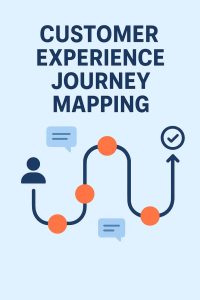
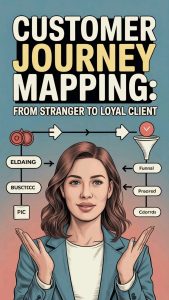
A software company once spent months improving their landing page, convinced that was where they were losing customers. After finally mapping the entire customer experience from start to finish, they discovered the real problem was buried three steps later, in a confusing account setup process nobody on the marketing team had ever actually walked through themselves. Fixing the landing page would have changed nothing. Seeing the full journey changed everything. We just explored how A/B testing helps improve individual elements. Now let’s zoom out and look at the bigger picture those individual tests often live inside — the complete path a customer travels from first contact to loyal, repeat buyer. What Customer Journey Mapping Actually Is Customer journey mapping is the process of visually laying out every stage a customer goes through when interacting with your brand — from the very first moment they become aware you exist, through consideration, purchase, and beyond. Rather than focusing on a single touchpoint like a webpage or an ad, journey mapping captures the entire experience as one connected story, revealing exactly where things flow smoothly and where friction quietly builds up. Why This Exercise Matters So Much Teams often become deeply familiar with their own specific piece of the puzzle — a marketer knows the ad campaign inside out, a designer knows the website deeply, a support team knows common customer complaints. But rarely does anyone step back and experience the entire journey exactly as a real customer would, start to finish. This narrow view creates blind spots. A beautifully designed ad might drive genuine interest, only for that momentum to die at a confusing sign-up form nobody on the ad team ever noticed existed. The Typical Stages Covered in a Journey Map
Awareness — How does someone first discover your brand? A social media post, a friend’s recommendation, a search result? Consideration — What do they explore next? Your website, reviews, comparisons with competitors? Decision — What finally convinces them to commit — pricing clarity, trust signals, a specific persuasive detail? Onboarding or first use — What happens immediately after purchase? Is the experience smooth, confusing, delightful, frustrating? Ongoing use or loyalty — Do they return, recommend you to others, or quietly drift away after the initial purchase? Mapping each of these stages honestly, from the customer’s actual perspective rather than an internal assumption, often reveals surprising gaps. How to Actually Build a Journey Map Step 1: Define a specific customer type. Rather than mapping a vague, generic “everyone,” focus on one realistic type of customer with a clear starting point and goal. Step 2: List every touchpoint they encounter. Every ad, webpage, email, support interaction, or product experience that customer might pass through, in order. Step 3: Identify their goal and mindset at each stage. What are they trying to accomplish, and what questions or doubts might be running through their mind at that specific point? Step 4: Spot friction points honestly. Where might confusion, frustration, or unnecessary delay realistically occur? This step often requires genuinely experiencing your own process as a customer would, rather than relying on assumption. Step 5: Identify improvement opportunities. Once friction points are visible, prioritize fixing the ones causing the most significant drop-off first. A Simple Example
Imagine an online course platform mapping the journey of someone interested in learning graphic design. Awareness: They discover the platform through a YouTube ad showcasing student projects. Consideration: They browse the course page, read a few reviews, and check the syllabus. Decision: Seeing a clear beginner-friendly promise and a reasonable price convinces them to enroll. Onboarding: After purchasing, they’re dropped straight into Lesson One, with no clear welcome message or guidance on where to start, leaving them slightly confused about pacing and expectations. Ongoing use: Because that confusing start left a slightly negative impression, they complete the course but never explore other offerings from the same platform. By mapping this out, the company realizes their marketing and sales process works beautifully — awareness, consideration, and decision are all strong. The real weakness lives in onboarding, an area the marketing team had never closely examined, since it technically falls outside typical “marketing” responsibilities.
Common Mistakes When Mapping a Customer Journey Mapping from an internal, company-centered view rather than the customer’s actual experience. It’s easy to describe what your team intends to happen at each stage, rather than what genuinely happens from the customer’s perspective. Focusing only on the path toward purchase, ignoring what happens afterward. Onboarding, ongoing use, and loyalty stages are just as important as the initial sale, especially for subscription or repeat-purchase businesses. Assuming one journey fits every customer type. Different customer segments often take meaningfully different paths, with different concerns and touchpoints along the way. Creating the map once and never revisiting it. Customer behavior and expectations shift over time, meaning journey maps benefit from periodic review and updates. Why This Exercise Pays Off Long-Term Customer journey mapping forces a shift in perspective — Teams in charge of marketing, sales, products, and support usually only see the client through their particular touchpoint. By bringing different departments together under a common visual reference point, journey mapping increases the visibility of handoffs, dependencies, and communication gaps. Internal teams frequently believe that the consumer will receive the same experience that they provide. By displaying the precise times a user struggles—moments that are often missed by conventional metric tracking—a map bridges this gap. This mapping compels teams to give priority to high-emotion and high-effort touchpoints rather than treating every connection equally. It demonstrates how a small fix may turn annoyance into brand loyalty. from viewing your business through your own internal departments, to viewing it as one continuous, connected experience through the customer’s eyes. That shift alone often reveals opportunities that isolated fixes, like a single A/B test or an isolated marketing campaign, would never surface on their own. What’s Next? Understanding the full journey reveals where friction exists. The next logical step is actively working to reduce that friction wherever it appears, turning more visitors into paying customers. In our next post, we’ll explore conversion rate optimization, and how small, deliberate changes across a website can meaningfully improve results.
What Is A/B Testing, and How to Run Your First Test
all at once, and one version performs better, you won’t actually know which specific change caused the improvement.
Testing one variable at a time is slower, but it also produces genuinely reliable, actionable insight — rather than a confusing mix of untraceable changes. What You Can Actually Test Headlines and titles — Different phrasing, tone, or angles for the same core message. Call-to-action buttons — Wording, color, size, or placement on a page. Images and visuals — Different photos, illustrations, or video thumbnails representing the same content. Email subject lines — Testing which phrasing earns higher open rates before even considering the email’s actual content. Page layout and structure — Where key information or buttons are positioned on the page.
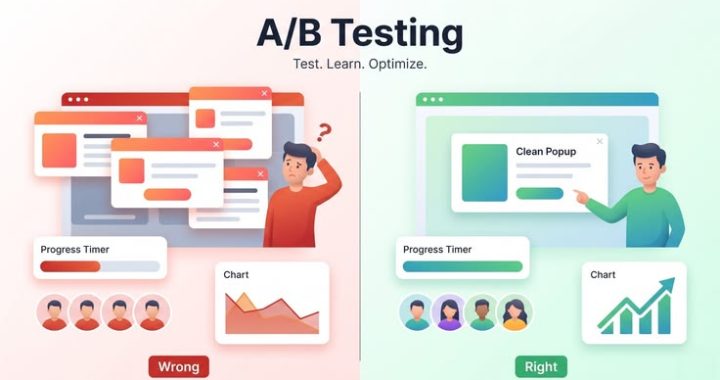
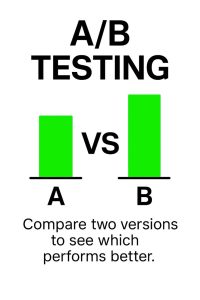
How to Actually Run Your First Test Step 1: Pick one clear goal. Decide exactly what you’re measuring — clicks, sign-ups, purchases — before starting, so you know precisely what “better” actually means. Step 2: Select just one variable to examine.. Resist the temptation to change multiple elements simultaneously, even if it feels efficient. Step 3: Split your audience fairly. Ideally, visitors should be randomly assigned to either version, ensuring neither group is biased toward a particular outcome from the start. Step 4: Let it run long enough for meaningful data. Ending a test too early, based on a small sample, often produces misleading results that don’t hold up over time. Step 5: Analyze the results honestly. If the difference between versions is small or unclear, it may not represent a genuinely meaningful improvement worth implementing. Step 6: Implement the winner, then test again. A/B testing isn’t a one-time event — it’s an ongoing habit of continuous, incremental improvement.
A Simple Example : Imagine an online plant shop testing two versions of their homepage banner. Version A reads “Bring Nature Into Your Home.” Version B reads “Plants That Actually Survive Beginners.” After running the test for two weeks with a reasonably sized audience, Version B produces noticeably more clicks toward the shop page. The specific, slightly humorous promise of surviving as a beginner apparently resonated more directly with visitor concerns than the more generic, poetic phrasing in Version A. Without testing, the shop might have simply kept the original banner indefinitely, assuming it was “good enough,” never realizing a small wording change could meaningfully shift visitor behavior.
Common Mistakes Beginners Make Testing too many variables simultaneously. This makes it impossible to identify exactly what caused any change in results. Ending tests too early. A slight early lead for one version can easily reverse once more data comes in, especially with smaller audiences. Testing something that doesn’t actually matter much. Spending weeks testing a minor color shade, while ignoring a confusing checkout process, misplaces effort on low-impact changes. Ignoring statistical significance. A small difference between two versions might simply be random variation, not a genuinely reliable pattern worth acting on. Why Small Tests Can Lead to Meaningful Growth Over Time A single A/B test rarely transforms a business overnight. Localised leaks in the funnel can be fixed by modifying current assets, but a fundamentally broken product-market fit or company strategy cannot be fixed A/B testing can optimise (finding a local maximum), but it typically doesn’t help you change course and create a whole new, revolutionary product (finding a global maximum). Since many tests produce neutral or inconclusive results, no adjustment should be made right away. .It takes weeks or even months to achieve statistical significance unless a company has enormous, enterprise-level web traffic. Wide-ranging adjustments to incomplete data frequently result in “false positives,” where early improvements eventually vanish. The real power comes from consistently testing, learning, and refining over months and years — small , evidence-based improvements accumulating into significant overall gains, far more reliably than occasional large, untested changes based on guesswork.
What’s Next? Testing individual elements like headlines and buttons is powerful, but it only tells part of the story. To truly understand where visitors are dropping off or getting stuck, it helps to zoom out and map their entire experience with your brand. In the next post, we’ll explore customer journey mapping, and how understanding that full path can reveal opportunities testing alone might miss.
What Are KPIs? The Metrics That Actually Matter (and Which Ones Don’t)
A mobile app once celebrated crossing one million downloads with a company-wide announcement, cake included. Six months later, fewer than two percent of those users had opened the app more than once. The download number looked impressive on a slide, but it wasn’t actually measuring anything close to real success. That’s the exact trap KPIs are meant to help you avoid. In our last post, we explored how to read Google Analytics. Now let’s tackle a closely related question: out of the dozens of numbers available to track, which ones genuinely deserve your attention? What Is a KPI, in Plain Terms? KPI stands for Key Performance Indicator — a specific, measurable number tied directly to a goal that actually matters for your business or project. The keyword here is key. Not every number you can measure deserves to be called a KPI. A true KPI is chosen deliberately because it reflects genuine progress toward something meaningful, not just something easy or satisfying to track. Why Picking the Right KPI Matters So Much Tracking the wrong numbers doesn’t just waste time — it can actively mislead decision-making. A business celebrating rising website visitors while sales quietly decline is optimizing for the wrong signal entirely. The visitor count feels good, but it isn’t connected to what actually keeps the business alive. Effective KPIs serve as a compass, directing focus away from whatever figure is currently increasing and toward what actually propels growth. Vanity Metrics: The Numbers That Feel Good But Mean Little Total followers or subscribers — A large following sounds impressive, but if engagement and conversions remain flat, that number alone isn’t driving real results.
If a page receives a lot of traffic but never generates leads or customers, it’s not always a success. Likes and generic engagement — A post covered in likes doesn’t automatically translate into sales, sign-ups, or loyal customers. These aren’t useless numbers entirely — they can offer helpful context. The problem arises when they’re treated as the main measure of success, rather than a supporting detail. KPIs That Genuinely Tend to Matter Conversion rate — The percentage of visitors who complete a meaningful action, like making a purchase or submitting a form. This connects traffic directly to actual outcomes. Customer acquisition cost — How much it costs, on average, to gain a single new customer. This aids in determining the true sustainability of your marketing expenditures. Customer lifetime value — The total revenue a customer is expected to generate over their entire relationship with your business, not just their first purchase. Retention rate — The proportion of consumers or users who stick around over time as opposed to making one attempt and then leaving. Return on ad spend — For paid campaigns, this measures how much revenue is generated for every unit of money spent on advertising. How to Select the Appropriate KPIs for Your Particular Objectives There’s no single universal list of “correct” KPIs — the right ones depend entirely on what you’re actually trying to achieve. Start with your actual goal, not available data. Ask what success genuinely looks like for your specific project, then work backward to find the number that best reflects that outcome. Limit yourself to a small handful. Tracking different metrics frequently increases confusion rather than clarity. A focused set of three to five meaningful KPIs tends to guide decisions far more effectively. Reassess periodically. As goals shift — from building initial awareness to focusing on retention, for instance — the KPIs worth prioritizing often shift too. A Simple Example Imagine a subscription meal-kit company in its early stages, focused purely on growing subscriber numbers. New sign-ups climb steadily, and the team celebrates each milestone. But a closer look reveals nearly half of new subscribers cancel within the first month. Total subscriber count kept climbing, masking a serious underlying problem: retention. Once the company shifted its primary KPI from raw sign-ups to first-month retention rate, they identified specific onboarding issues causing early cancellations, and fixed them directly — something the sign-up number alone had been quietly hiding.
Common Mistakes When Choosing KPIs Seeking measures that are simple to monitor but may not be significant. Some numbers are simply more visible or satisfying to watch grow, even if they don’t reflect genuine progress. Copying KPIs from another business without adapting them. What counts for a small, sustainable local business that prioritises loyalty could be completely different from what matters for a rapidly expanding startup chasing growth. Ignoring the relationship between metrics. A rising conversion rate paired with a declining customer lifetime value, for instance, might indicate you’re attracting the wrong type of customer, even though one number alone looks positive. How to Start Applying This Step 1:Right now, list your top priorities: brand awareness, growth, retention, and profitability. Step 2: Identify one or two numbers that would genuinely reflect progress toward that specific goal, rather than numbers that are simply available. Step 3: Set a realistic benchmark or target for that number, based on your current baseline. Step 4: Review it consistently, adjusting your approach based on real movement, not assumptions. Why This Mindset Shift Matters Long-Term Choosing the right KPIs is less about spreadsheets and more about discipline Instead of tracking fifty vanity metrics just because your program can display them, discipline compels you to choose three to five KPIs that actually matter. Discipline is required for weekly report reviews, holding teams responsible for subpar work, and refusing to alter goals every month. — resisting the pull of numbers that simply feel good to watch rise, and staying focused on what genuinely reflects meaningful progress. Marketers and business owners who master this distinction tend to make sharper decisions, faster, because they’re not distracted by noise disguised as success. What’s Next? Once you know which numbers actually matter, the natural next step is figuring out how to actively improve them. In the next post, we’ll explore A/B testing —a practical, evidence-based method for testing changes and discovering what genuinely moves your key metrics in the right direction.
What Is Google Analytics, and How to Read It Like a Pro
A bakery owner once told a friend her website was “doing great” because people kept telling her they’d visited it. Weeks later, she checked her analytics for the first time and discovered ninety percent of those visitors left within eight seconds, without scrolling past the homepage. Compliments felt good, but the numbers told a very different, far more useful story. This post opens a new section of our series, moving from creative and strategic topics into the world of data We’ll begin with Google Analytics, the most popular tool for figuring out what’s really going on on a website. What Google Analytics Actually Is Google Analytics is a free tool that tracks and reports on how people behave on your website — where they come from, what pages they visit, how long they stay, and what actions they take before leaving. Instead of guessing whether your website is working, Analytics replaces guesswork with actual evidence. It turns invisible visitor behavior into readable patterns you can act on. Why This Tool Matters So Much Without data, decisions about a website often rely on assumptions or gut feeling. Someone might assume their homepage is engaging simply because they personally like the design, while visitors are quietly bouncing off within seconds. Analytics removes that guesswork by answering questions like: Where are visitors actually coming from — search engines, social media, direct links? Which pages keep people engaged, and which ones drive them away quickly? Are visitors completing the actions you want, like signing up or making a purchase? The Core Metrics Worth Understanding First Users and Sessions — Users count unique visitors, while sessions count individual visits, including repeat ones from the same person. A single visitor browsing your site twice in one day counts as one user but two sessions. Traffic Sources — This shows where visitors originated from: organic search, social media, direct typing of your URL, referral links from other sites, or paid ads. Bounce Rate — The percentage of visitors who leave after viewing only a single page, without exploring further. A high bounce rate on an important page often signals something isn’t resonating. Average Engagement Time — The average amount of time visitors spend actively interacting with your website is a powerful indicator of whether or not your material is actually capturing their attention. Conversion Events — Specific actions you’ve defined as valuable, such as completing a purchase, submitting a form, or clicking a particular button.
How to Actually Read These Numbers Like a Pro Numbers alone don’t mean much without context. The real skill lies in comparing data over time and asking why patterns exist, rather than just glancing at a single figure. Compare periods, not just snapshots. A single day’s traffic tells you very little. Comparing this month against last month, or this quarter against the same quarter last year, reveals actual trends. Look at bounce rate alongside the page’s purpose. A high bounce rate on a blog post that fully answers a reader’s question in one page isn’t necessarily bad — but the same bounce rate on your checkout page is a serious red flag worth investigating. Follow the visitor’s path, not just entry points. Understanding which page someone visited after landing on your site often reveals more about their real intent than the entry page alone. Segment your audience. Instead of viewing all visitors as one group, break them down by traffic source, device type, or location. A page performing poorly overall might actually be thriving with one specific segment, hidden inside an average. A Practical Example Picture an online store selling handcrafted jewelry. Checking Analytics, the owner notices a specific blog post about “how to layer necklaces” is bringing in significant traffic from search engines, but almost none of those visitors ever reach the product pages. Rather than assuming the traffic is worthless, she investigates further and realizes the blog post has no visible link guiding readers toward relevant product pages. After adding a clear internal link within the article, that same traffic source begins converting into actual sales — a change she never would have identified without examining the visitor path closely. Common Mistakes Beginners Make With Analytics Checking numbers without a specific question in mind. Randomly scrolling through dashboards rarely produces useful insight. Ignoring mobile versus desktop differences. A website that performs beautifully on desktop might have serious usability issues on mobile, which broad, unsegmented data can easily hide. Obsessing over vanity metrics. Total visitor count feels satisfying to watch grow, but it means little if those visitors never take any meaningful action once they arrive. Never setting up conversion tracking. Without clearly defining what counts as a meaningful action on your site, Analytics can only tell you that people visited — not whether that visit actually mattered to your goals.
Getting Started Without Feeling Overwhelmed Analytics platforms can feel intimidating at first glance, packed with charts and terminology. A simple starting approach: Step 1: Set up basic conversion tracking for your most important goal — a purchase, a sign-up, a contact form submission. Step 2: Check your traffic sources weekly, noticing which channels are actually bringing engaged visitors versus which bring people who leave immediately. Step 3: Pick one underperforming page and dig into why, rather than trying to analyze your entire site at once. Step 4: Make one small change based on what you find, then revisit the data afterward to see whether it actually moved the needle. Why This Skill Compounds Over Time The real value of Analytics isn’t a single insight — it’s the habit of consistently checking, questioning, and adjusting based on real evidence rather than assumption. Marketers who build this habit early tend to make sharper, faster decisions over time, simply because they’re responding to what’s actually happening rather than what they hope is happening. What’s Next? Understanding how to read visitor behavior is a strong foundation, but data alone doesn’t tell you which specific numbers deserve your attention in the first place. In the next post, we’ll break down KPIs — the key metrics that genuinely matter for growth, and the commonly tracked numbers that often distract from what really counts.