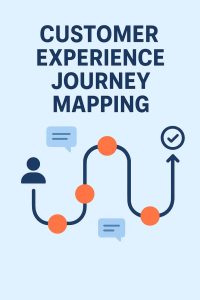
A software company once spent months improving their landing page, convinced that was where they were losing customers. After finally mapping the entire customer experience from start to finish, they discovered the real problem was buried three steps later, in a confusing account setup process nobody on the marketing team had ever actually walked through themselves. Fixing the landing page would have changed nothing. Seeing the full journey changed everything. We just explored how A/B testing helps improve individual elements. Now let’s zoom out and look at the bigger picture those individual tests often live inside — the complete path a customer travels from first contact to loyal, repeat buyer. What Customer Journey Mapping Actually Is Customer journey mapping is the process of visually laying out every stage a customer goes through when interacting with your brand — from the very first moment they become aware you exist, through consideration, purchase, and beyond. Rather than focusing on a single touchpoint like a webpage or an ad, journey mapping captures the entire experience as one connected story, revealing exactly where things flow smoothly and where friction quietly builds up. Why This Exercise Matters So Much Teams often become deeply familiar with their own specific piece of the puzzle — a marketer knows the ad campaign inside out, a designer knows the website deeply, a support team knows common customer complaints. But rarely does anyone step back and experience the entire journey exactly as a real customer would, start to finish. This narrow view creates blind spots. A beautifully designed ad might drive genuine interest, only for that momentum to die at a confusing sign-up form nobody on the ad team ever noticed existed. The Typical Stages Covered in a Journey Map
Awareness — How does someone first discover your brand? A social media post, a friend’s recommendation, a search result? Consideration — What do they explore next? Your website, reviews, comparisons with competitors? Decision — What finally convinces them to commit — pricing clarity, trust signals, a specific persuasive detail? Onboarding or first use — What happens immediately after purchase? Is the experience smooth, confusing, delightful, frustrating? Ongoing use or loyalty — Do they return, recommend you to others, or quietly drift away after the initial purchase? Mapping each of these stages honestly, from the customer’s actual perspective rather than an internal assumption, often reveals surprising gaps. How to Actually Build a Journey Map Step 1: Define a specific customer type. Rather than mapping a vague, generic “everyone,” focus on one realistic type of customer with a clear starting point and goal. Step 2: List every touchpoint they encounter. Every ad, webpage, email, support interaction, or product experience that customer might pass through, in order. Step 3: Identify their goal and mindset at each stage. What are they trying to accomplish, and what questions or doubts might be running through their mind at that specific point? Step 4: Spot friction points honestly. Where might confusion, frustration, or unnecessary delay realistically occur? This step often requires genuinely experiencing your own process as a customer would, rather than relying on assumption. Step 5: Identify improvement opportunities. Once friction points are visible, prioritize fixing the ones causing the most significant drop-off first. A Simple Example
Imagine an online course platform mapping the journey of someone interested in learning graphic design. Awareness: They discover the platform through a YouTube ad showcasing student projects. Consideration: They browse the course page, read a few reviews, and check the syllabus. Decision: Seeing a clear beginner-friendly promise and a reasonable price convinces them to enroll. Onboarding: After purchasing, they’re dropped straight into Lesson One, with no clear welcome message or guidance on where to start, leaving them slightly confused about pacing and expectations. Ongoing use: Because that confusing start left a slightly negative impression, they complete the course but never explore other offerings from the same platform. By mapping this out, the company realizes their marketing and sales process works beautifully — awareness, consideration, and decision are all strong. The real weakness lives in onboarding, an area the marketing team had never closely examined, since it technically falls outside typical “marketing” responsibilities.
Common Mistakes When Mapping a Customer Journey Mapping from an internal, company-centered view rather than the customer’s actual experience. It’s easy to describe what your team intends to happen at each stage, rather than what genuinely happens from the customer’s perspective. Focusing only on the path toward purchase, ignoring what happens afterward. Onboarding, ongoing use, and loyalty stages are just as important as the initial sale, especially for subscription or repeat-purchase businesses. Assuming one journey fits every customer type. Different customer segments often take meaningfully different paths, with different concerns and touchpoints along the way. Creating the map once and never revisiting it. Customer behavior and expectations shift over time, meaning journey maps benefit from periodic review and updates. Why This Exercise Pays Off Long-Term Customer journey mapping forces a shift in perspective — Teams in charge of marketing, sales, products, and support usually only see the client through their particular touchpoint. By bringing different departments together under a common visual reference point, journey mapping increases the visibility of handoffs, dependencies, and communication gaps. Internal teams frequently believe that the consumer will receive the same experience that they provide. By displaying the precise times a user struggles—moments that are often missed by conventional metric tracking—a map bridges this gap. This mapping compels teams to give priority to high-emotion and high-effort touchpoints rather than treating every connection equally. It demonstrates how a small fix may turn annoyance into brand loyalty. from viewing your business through your own internal departments, to viewing it as one continuous, connected experience through the customer’s eyes. That shift alone often reveals opportunities that isolated fixes, like a single A/B test or an isolated marketing campaign, would never surface on their own. What’s Next? Understanding the full journey reveals where friction exists. The next logical step is actively working to reduce that friction wherever it appears, turning more visitors into paying customers. In our next post, we’ll explore conversion rate optimization, and how small, deliberate changes across a website can meaningfully improve results.