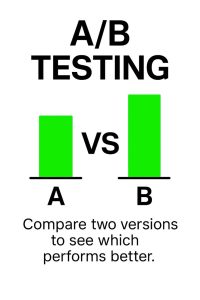
What Is A/B Testing, and How to Run Your First Test
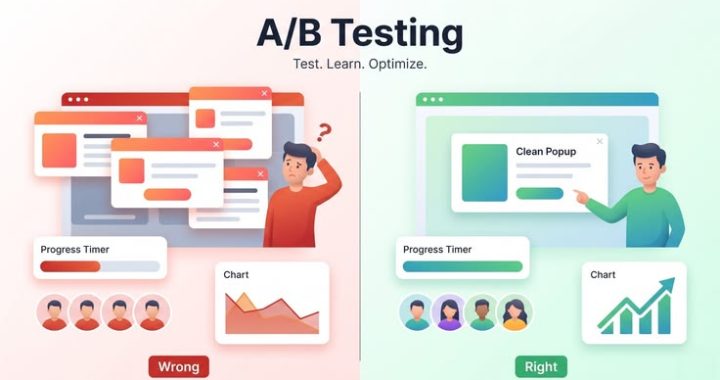
all at once, and one version performs better, you won’t actually know which specific change caused the improvement.
Testing one variable at a time is slower, but it also produces genuinely reliable, actionable insight — rather than a confusing mix of untraceable changes. What You Can Actually Test Headlines and titles — Different phrasing, tone, or angles for the same core message. Call-to-action buttons — Wording, color, size, or placement on a page. Images and visuals — Different photos, illustrations, or video thumbnails representing the same content. Email subject lines — Testing which phrasing earns higher open rates before even considering the email’s actual content. Page layout and structure — Where key information or buttons are positioned on the page.
How to Actually Run Your First Test Step 1: Pick one clear goal. Decide exactly what you’re measuring — clicks, sign-ups, purchases — before starting, so you know precisely what “better” actually means. Step 2: Select just one variable to examine.. Resist the temptation to change multiple elements simultaneously, even if it feels efficient. Step 3: Split your audience fairly. Ideally, visitors should be randomly assigned to either version, ensuring neither group is biased toward a particular outcome from the start. Step 4: Let it run long enough for meaningful data. Ending a test too early, based on a small sample, often produces misleading results that don’t hold up over time. Step 5: Analyze the results honestly. If the difference between versions is small or unclear, it may not represent a genuinely meaningful improvement worth implementing. Step 6: Implement the winner, then test again. A/B testing isn’t a one-time event — it’s an ongoing habit of continuous, incremental improvement.
A Simple Example : Imagine an online plant shop testing two versions of their homepage banner. Version A reads “Bring Nature Into Your Home.” Version B reads “Plants That Actually Survive Beginners.” After running the test for two weeks with a reasonably sized audience, Version B produces noticeably more clicks toward the shop page. The specific, slightly humorous promise of surviving as a beginner apparently resonated more directly with visitor concerns than the more generic, poetic phrasing in Version A. Without testing, the shop might have simply kept the original banner indefinitely, assuming it was “good enough,” never realizing a small wording change could meaningfully shift visitor behavior.
Common Mistakes Beginners Make Testing too many variables simultaneously. This makes it impossible to identify exactly what caused any change in results. Ending tests too early. A slight early lead for one version can easily reverse once more data comes in, especially with smaller audiences. Testing something that doesn’t actually matter much. Spending weeks testing a minor color shade, while ignoring a confusing checkout process, misplaces effort on low-impact changes. Ignoring statistical significance. A small difference between two versions might simply be random variation, not a genuinely reliable pattern worth acting on. Why Small Tests Can Lead to Meaningful Growth Over Time A single A/B test rarely transforms a business overnight. Localised leaks in the funnel can be fixed by modifying current assets, but a fundamentally broken product-market fit or company strategy cannot be fixed A/B testing can optimise (finding a local maximum), but it typically doesn’t help you change course and create a whole new, revolutionary product (finding a global maximum). Since many tests produce neutral or inconclusive results, no adjustment should be made right away. .It takes weeks or even months to achieve statistical significance unless a company has enormous, enterprise-level web traffic. Wide-ranging adjustments to incomplete data frequently result in “false positives,” where early improvements eventually vanish. The real power comes from consistently testing, learning, and refining over months and years — small , evidence-based improvements accumulating into significant overall gains, far more reliably than occasional large, untested changes based on guesswork.
What’s Next? Testing individual elements like headlines and buttons is powerful, but it only tells part of the story. To truly understand where visitors are dropping off or getting stuck, it helps to zoom out and map their entire experience with your brand. In the next post, we’ll explore customer journey mapping, and how understanding that full path can reveal opportunities testing alone might miss.