What Is SEO? How Search Engines Actually Rank Your Content
Have you ever typed a question into Google and barely glanced past the first three results? Most people do exactly that — and if your business isn’t sitting somewhere near the top, you’re essentially invisible to a huge chunk of your potential audience. That invisibility problem is exactly what SEO exists to solve. In our last post, we covered what digital marketing is as a whole. Today, we’re zooming into one of its most powerful pillars: Search Engine Optimization, better known as SEO.
What Is SEO, in simple terms ? SEO is the process of improving your website so that search engines like Google understand it, trust it, and show it to the right people when they search for something related to what you offer. Think of Google as a giant librarian. Every day, millions of people walk up and ask questions. The librarian’s job is to hand them the most helpful, accurate, and trustworthy book from the shelves — instantly. SEO is essentially the work you do to make sure your “book” is the one the librarian reaches for first. Nobody pays Google directly to rank higher in these natural results — that’s the “organic” part. SEO is earned through relevance and trust, not a paid placement.
Why Should You Actually Care About SEO?
Imagine two bakeries in the same city. One shows up on the first page when someone searches “fresh sourdough bread near me.” The other doesn’t show up at all, even though its bread might be just as good. Which one gets the customer? That’s the quiet power of SEO — it brings people to you who are already looking for what you sell, without you having to interrupt them with an ad. A few reasons SEO matters so much: It brings free, consistent traffic. Unlike ads, you don’t pay per visitor once you rank well. It builds long-term trust. People trust organic results more than ads, since they feel earned rather than bought. It compounds over time. A well-optimized blog post can keep bringing visitors for years, unlike a paid ad that stops the moment your budget runs out. How Search Engines Actually Decide Rankings Google doesn’t randomly pick which pages to show. Behind the scenes, it runs a complex, constantly evolving process to decide what deserves the top spot. Here’s a simplified breakdown of what’s really happening:
1. Crawling Google uses automated programs, often called “bots” or “spiders,” that travel across the internet, jumping from link to link, discovering new and updated pages. If your site has never been crawled, it simply doesn’t exist in Google’s eyes yet. 2. Indexing Once a page is discovered, Google reads and stores its content in a massive database, called an index. It tries to understand what the page is actually about — the topic, the intent, the quality. 3. Ranking When someone searches a query, Google scans its index and ranks the most relevant, trustworthy, and useful pages at the top. This ranking depends on hundreds of signals, but a few matter far more than others. The Big Ranking Factors That Actually Move the Needle You don’t need to memorize hundreds of technical signals. Most of what matters boils down to these core categories: Relevance — Does your content actually answer what the person is searching for? A page about “dog training tips” won’t rank for someone searching “cat food brands,” no matter how well-written it is. Quality and depth — Thin, vague content rarely ranks well anymore. Search engines favor content that thoroughly answers a question, backed by clear explanations or examples. User experience — Slow-loading pages, confusing navigation, or a site that looks broken on mobile can quietly kill your rankings, even if the content itself is great. Backlinks — When other trustworthy websites link to your page, it acts like a vote of confidence. The more relevant, high-quality sites that link to you, the more Google trusts your content. Freshness and consistency — Regularly updated, active websites tend to be viewed more favorably than ones that haven’t been touched in years.
The Two Main Types of SEO
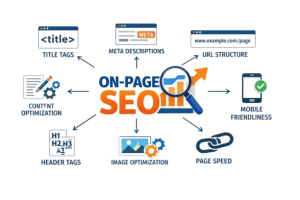
On-Page SEO This refers to everything you control directly on your website — your titles, headings, content quality, images, internal links, and page speed. It’s the foundation everything else builds on.
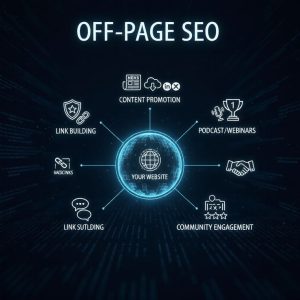
Off-Page SEO This includes actions taken outside your website that influence your reputation, like earning backlinks from other sites, getting mentioned in articles, or building a recognizable brand presence across the web. Both work together. Great on-page content with zero off-page authority struggles to rank. Strong backlinks pointing to a poorly written page rarely help either. A Simple Example of SEO in Action : Let’s go back to our candle business from the last post. Suppose you write a detailed blog post titled “How to Choose the Right Candle Scent for Every Room in Your Home.” If that post genuinely answers the question, loads quickly, is easy to read, and eventually earns a few links from home décor blogs — Google starts to notice. Over weeks and months, it may begin appearing when people search things like “best candle scents for bedroom” or “how to pick candle scents.” That’s not luck. That’s SEO quietly doing its job, bringing in visitors who are already interested — without you spending a single rupee on ads.
Common SEO Myths, Cleared Up “SEO is a one-time task.” Not true. Search engines constantly update how they evaluate pages, and competitors are always publishing new content. SEO is ongoing, not a checkbox you tick once. “More keywords equal better rankings.” Stuffing a page with the same keyword repeatedly used to work years ago — today, it can actually hurt you. Search engines now prioritize natural, helpful writing over robotic keyword repetition. “SEO results are instant.” SEO is closer to planting a tree than flipping a switch. It typically takes weeks or months of consistent effort before real results show up — but unlike ads, those results tend to stick around far longer. Where Should You Start? If you’re just beginning, don’t try to master everything at once. Start small: Pick topics your audience is genuinely searching for. Write clear, genuinely useful content — the kind you’d want to read yourself. Make sure your website loads quickly and works well on mobile. Slowly build relationships that earn you natural backlinks over time. SEO rewards patience and consistency far more than shortcuts or tricks.
What’s Next? Now that you understand how search engines decide what deserves the spotlight, a natural question comes up: should you rely on this slow-and-steady organic approach, or invest in paid ads for faster results? In the next post, we’ll break down paid versus organic marketing, and help you figure out exactly where a beginner should start.